Sergio Marani
Overview
- Verdicchio reaches new heights of complexity in this Apennine enclave, showcasing bracing acidity, mineral intensity, and remarkable focus.
- Crafting glorious Verdicchio from century-old vines and ancient casks, this family-owned estate embodies tradition and authenticity.
- With weathered charm and unwavering devotion, this artisan winemaker coaxes the truest expression from his mountain-grown grapes.

Sergio Marani Gallery
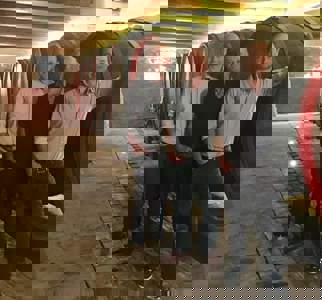
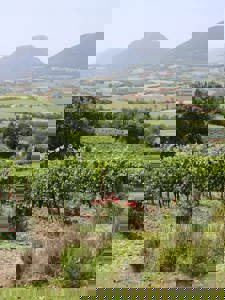
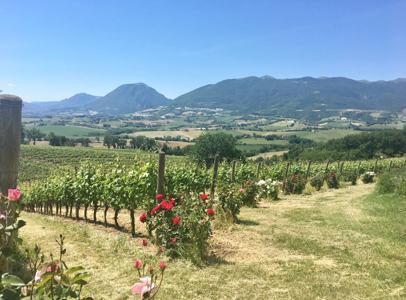
The Marche’s indigenous Verdicchio is perhaps better known through the Castelli de Jesi denomination and its breezy seaside versions of the variety, but it is inland from the Adriatic, in commune of Matelica, where Verdicchio reaches its apex of complexity. Nestled among the Apennines, Verdicchio di Matelica—comprising a mere 1/10 th of the planted surface area of Castelli di Jesi—is a mountain wine par excellence, offering at its best a combination of bracing acidity, tight-grained mineral structure, and remarkable focus. And no greater expressions of Verdicchio di Matelica exist than those of Sergio Marani, a dyed-in-the-wool artisan who wholeheartedly embraces the variety’s age-worthy intensity.
The Marani Legacy: A Family Tradition
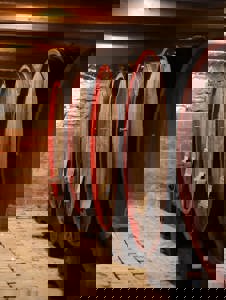
Sergio’s great-grandfather set up shop in Matelica in the late 1920s, growing grapes and other crops, and tending the oxen which formed the labor force for central Italy’s burgeoning railroad system. The family acquired their present-day property in the late 1960s, encompassing the house, the 300-year-old cellar, and 10 hectares of rolling hillsides upon which they planted the indigenous Verdicchio. Most of those vines are still producing fruit today, fruit which is vinified and aged in the very same barrels—large 15-hectoliter casks made from local Apennine wood—with which the Maranis outfitted their cellar at the winery’s inception. Few producers anywhere are fortunate enough to claim such a through-line, and this constancy manifests clearly in the self-assured spirit of Marani’s wines.
Sergio's Soulful Stewardship
That such glorious examples of Verdicchio were sold in bulk until 2015 boggles the mind, but it was only then that Sergio, with the encouragement of his two sons, began bottling under his own name. They produced just one wine for the first few years, but with the 2018 vintage they judiciously decided to separate their two starkly different vineyards: warmer Sannicola (named after the nearby church of San Nicola) faces southwest and yields a wine more honeyed, though no less mineral-driven; cooler northwest-facing Òppano (in local dialect, “shadow”), typically harvested two full weeks after Sannicola, offers more citrus pith and salinity. Only the estate’s oldest vines—50 years of age and above—go into these cru bottlings, which spend two full years in old 15-hectoliter casks; the younger vines, between 10 and 30 years old, are bottled after one year in cask as a non-vineyard-designated Verdicchio di Matelica. The family’s 10 hectares of vineyards are worked entirely organically, with cover-cropping employed extensively, and mechanization kept to a bare minimum.
Marani’s approach in the cellar is low-tech and unflashy, based on an unflinching trust in the quality of his source material. Hand-harvested bunches are pressed directly and transferred to large oak casks of Apennine origin, where the juice ferments spontaneously and undergoes full malolactic fermentation. The wines rest on their fine lees in these decades-old vessels with occasional stirring, which, in combination with the porosity of the oak, combats Verdicchio’s tendency toward reduction. Bottling takes place without fining or filtration (two practices rarely eschewed in the production of modern Italian whites), and the wines possess the ability to blossom in stunning fashion after outgrowing a brief period of youthful austerity.
Climate, soil, and cellar methodology aside, it is through the character of Sergio Marani himself that the resonant qualities of his wines can be fully grasped. In his sun-weathered complexion, his eyes wrinkled by a lifetime of smiling (perhaps devilishly on occasion), his unforced joviality and optimism, and his clear adoration of his own vinous creations, Sergio exudes a sense of naturalness, of a life given definition and meaning through honest hard work.